Open some large online grocery apps and you'll often see the same pattern: a product with a big strike-through price, a bright "24% OFF" badge, and a final price that feels like a win. The discount looks real — but the price it's calculated from can sit well above the printed MRP.
We pulled two everyday products and put the online app's "deal" next to the real printed MRP and the authorised stockist's rate on VeBy. Here is what we found.
Example 1 — Boost Health Drink, 1kg
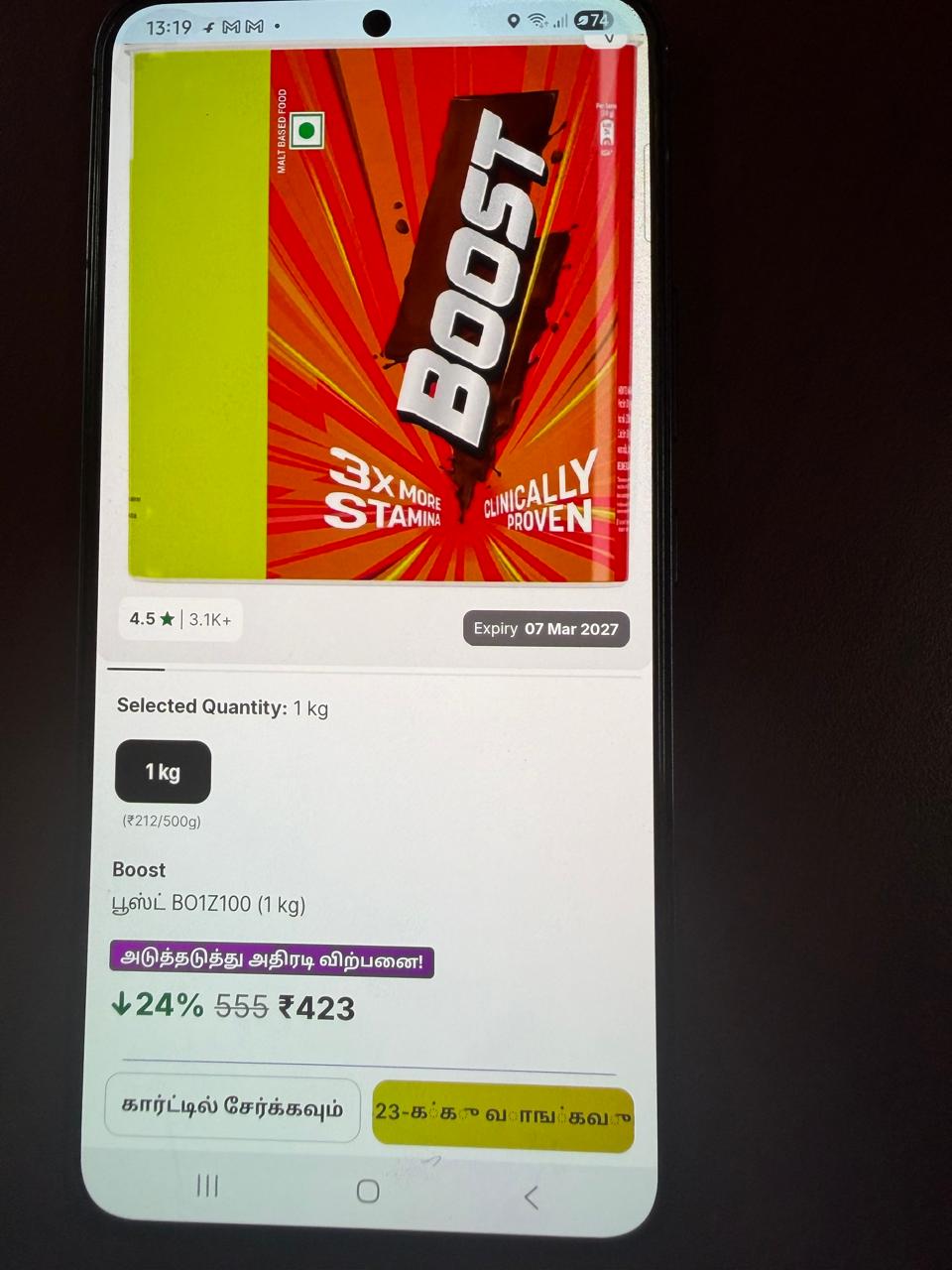
The printed MRP on a 1kg pack of Boost is ₹440 — not ₹555. The app inflated the displayed MRP by ₹115 so the discount would look dramatic. On VeBy, the same pack is ₹420 — the authorised stockist's rate, read straight from their billing software.
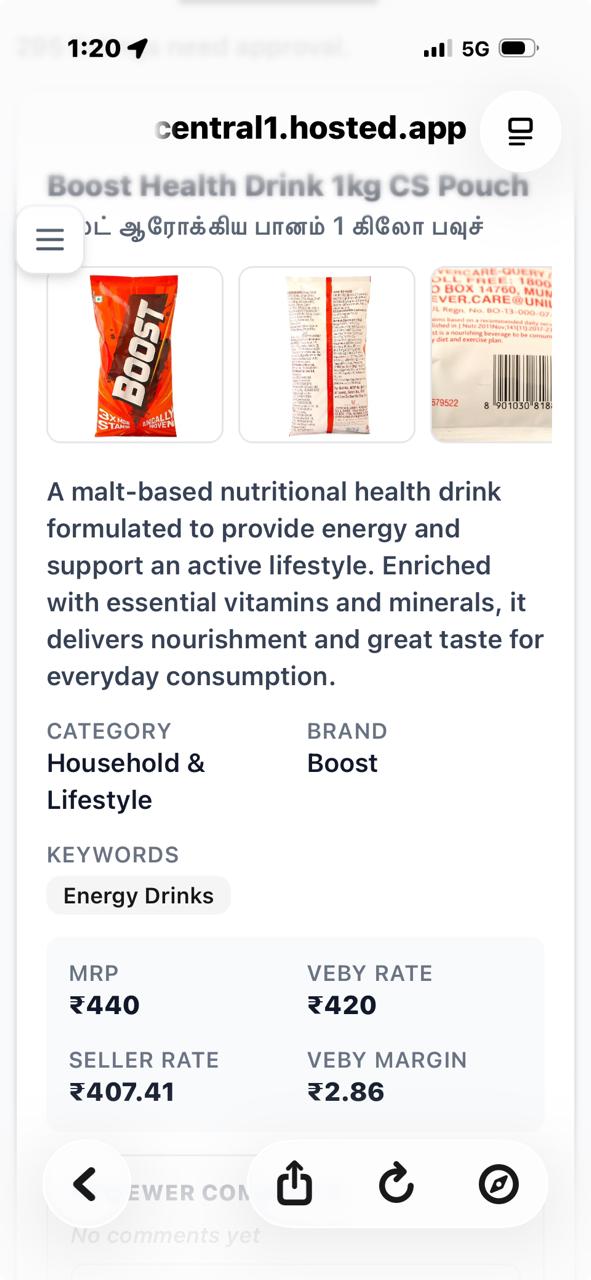
So their "24% off deal" of ₹423 is actually ₹3 more than VeBy's everyday price of ₹420 — and the discount was measured against a price that does not exist.
Example 2 — Pears Soap, pack of 4
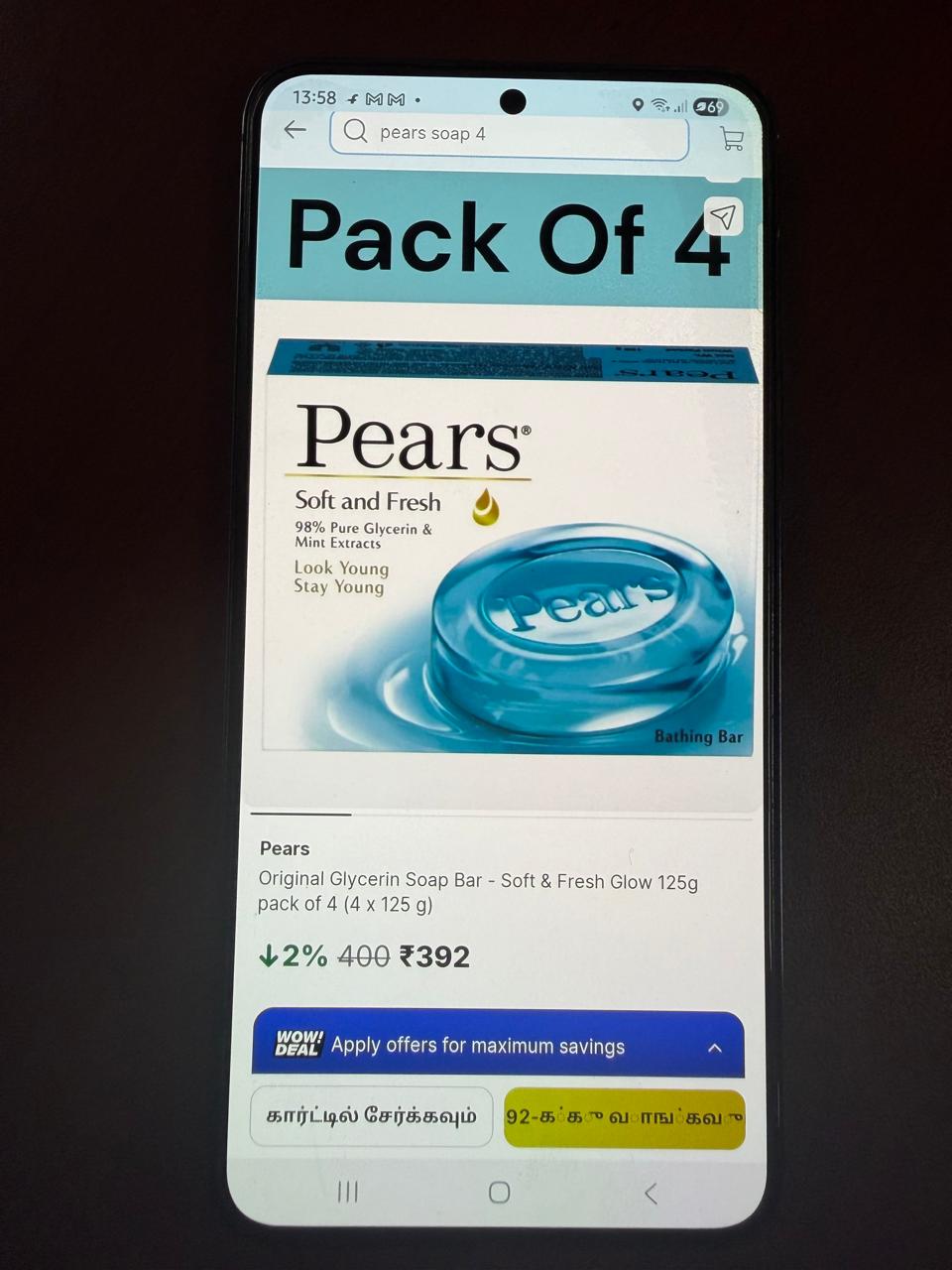
The real printed MRP for this pack is ₹320. The app's "MRP" of ₹400 is ₹80 above the real one — and even their "discounted" ₹392 sits above the actual printed MRP. On VeBy, the same pack is ₹309.
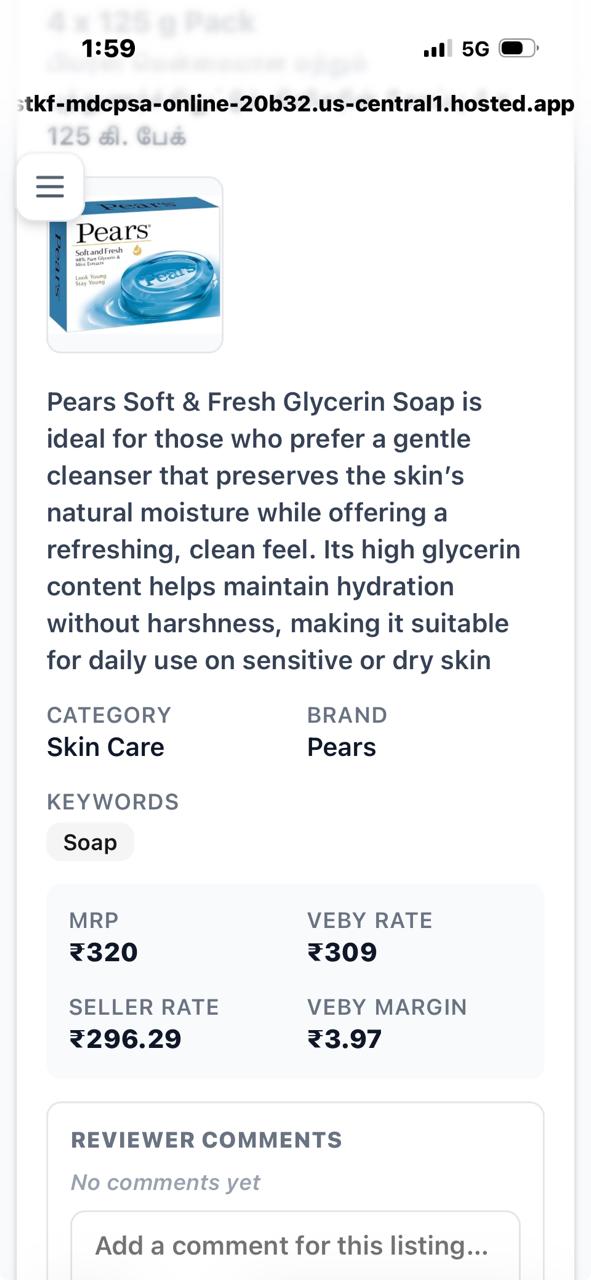
You would pay ₹392 for a "deal" on something whose real MRP is ₹320. On VeBy it is ₹309 — ₹83 less than the so-called offer.
How the trick works
It is a three-step illusion. Inflate the displayed MRP. Apply a percentage discount to that inflated number. Show a bright badge. The percentage is genuine — but the base price it is calculated from was chosen to make the saving look big. Anchor high, discount loud, collect more.
Why VeBy is different
VeBy shows the authorised stockist's actual rate, read directly from their billing software — the same price the stockist charges the kirana down the road. There is no inflated MRP to anchor against, and no invented discount. The number you see is the real one.
We are not running a sale. We are showing you the true price.